The Complete Guide to Badminton Court Measurements Every Player Should Know
Picture this: you’re watching an intense badminton match, and the shuttlecock lands just millimeters from the line. The referee makes the call, and the crowd erupts. What many spectators don’t realize is that this dramatic moment hinges on precise badminton court measurements that have been standardized worldwide. Every line, every boundary, and every marking on that court follows exact specifications that can make or break a championship point.
Badminton is one of the world’s fastest racket sports, with shuttlecocks reaching speeds of over 200 mph. Yet beneath this lightning-fast action lies a foundation of mathematical precision. Understanding badminton court measurements isn’t just important for players and coaches – it’s essential for anyone involved in court construction, facility management, or serious recreational play. These measurements ensure fair play, safety, and consistency across every badminton venue worldwide.
Understanding Standard Badminton Court Measurements
The foundation of any badminton game rests on standardized court dimensions that have been carefully established by the Badminton World Federation (BWF). These badminton court measurements ensure consistency and fairness across all levels of play, from recreational games to Olympic competitions.
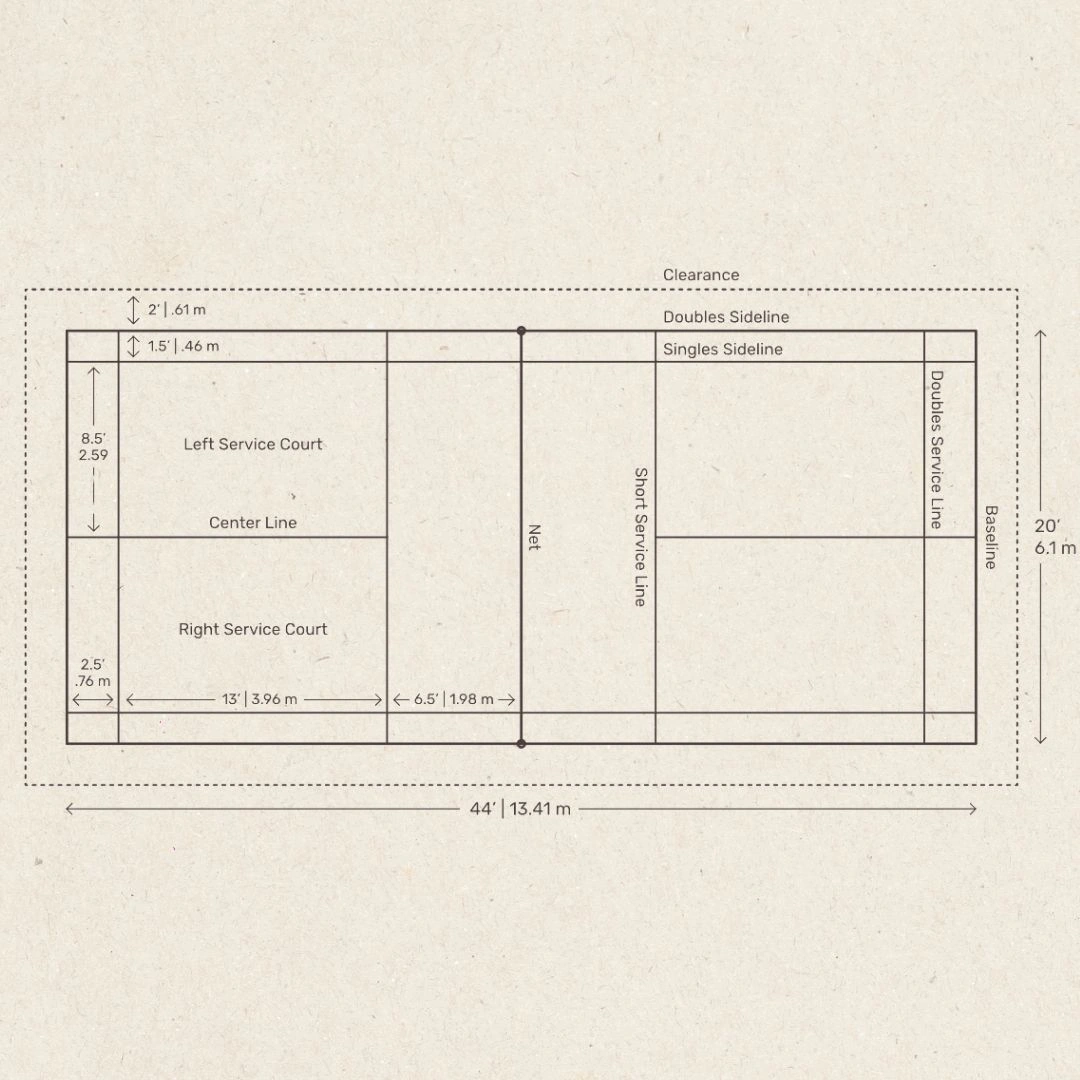
A regulation badminton court measures exactly 20 feet (6.1 meters) in width and 44 feet (13.4 meters) in length. These badminton court dimensions create a rectangular playing area that provides optimal space for both singles and doubles play. The court is divided into specific zones, each serving a particular purpose in gameplay strategy and rule enforcement.
The precision of these measurements cannot be overstated. Even a deviation of a few inches can significantly impact gameplay, affecting shot placement, movement patterns, and overall game dynamics. Professional venues undergo regular inspections to ensure their badminton court measurements remain within the acceptable tolerance range.
Key Components of Badminton Court Dimensions
The complete court layout includes several critical elements beyond the basic rectangular outline. The service courts, center line, back boundary line, and side boundary lines all have specific measurements that contribute to the overall badminton court size. Understanding these components helps players develop better court awareness and strategic positioning.
The net divides the court into two equal halves, positioned exactly at the center of the 44-foot length. This placement creates two 22-foot sections on either side, providing equal playing areas for both opponents or teams. The net height and positioning are also governed by strict badminton court measurements to ensure consistent playing conditions.
Singles vs Doubles Badminton Court Dimensions
One of the most important aspects of badminton court measurements is understanding how the court dimensions change between singles and doubles play. While the overall court size remains the same, the effective playing area differs significantly between these two formats.
Singles Court Specifications
For singles play, the badminton court dimensions utilize a narrower width measurement. The singles court measures 17 feet (5.18 meters) in width, compared to the full 20-foot width used in doubles. This reduction creates a more compact playing area that emphasizes speed, agility, and precise shot placement over power and coverage.
The length remains the same at 44 feet (13.4 meters) for singles play. However, the service court dimensions change significantly. In singles, the service court extends all the way to the back boundary line, creating a deeper service area. This aspect of badminton court measurements allows for more varied serving strategies in singles competition.
| Court Type | Width | Length | Service Court Width | Service Court Length |
|---|---|---|---|---|
| Singles | 17 feet (5.18m) | 44 feet (13.4m) | 8.5 feet (2.59m) | 22 feet (6.7m) |
| Doubles | 20 feet (6.1m) | 44 feet (13.4m) | 10 feet (3.05m) | 13 feet (3.96m) |
Doubles Court Specifications
Doubles play utilizes the full badminton court dimensions of 20 feet in width and 44 feet in length. This larger playing area accommodates four players and creates different strategic dynamics compared to singles play. The additional width provides more opportunities for cross-court shots and requires enhanced teamwork and court coverage.
In doubles, the service court dimensions are notably different from singles play. The service area extends to the full 20-foot width but is shorter in length, ending at the doubles service line rather than extending to the back boundary. These badminton court measurements create a service area that measures 10 feet wide by 13 feet long on each side of the net.
Detailed Breakdown of Badminton Court Measurements
Overall Court Dimensions
The standard badminton court size follows BWF regulations that have been refined over decades of international competition. The court measures 44 feet (13.4 meters) in length and 20 feet (6.1 meters) in width, creating a total playing area of 880 square feet (81.74 square meters).
These badminton court dimensions include specific boundary lines that define the playing area. The side lines run along the 44-foot length on both sides, while the baseline (back boundary line) caps each end of the court. All boundary lines are considered part of the court, meaning shots that land on these lines are considered “in” during play.
Service Court Areas
The service courts represent some of the most critical badminton court measurements for competitive play. These areas are defined by the center line, service lines, and side boundaries, creating four distinct service zones on the court.
For doubles play, each service court measures 10 feet (3.05 meters) in width and 13 feet (3.96 meters) in length. The service line is positioned 6.5 feet (1.98 meters) from the net, creating the front boundary of the service area. The back boundary of the doubles service court is the doubles service line, located 2.5 feet (0.76 meters) in front of the baseline.
In singles play, the service court dimensions change significantly. While the width reduces to 8.5 feet (2.59 meters) due to the narrower court, the length extends all the way to the baseline, creating a service area that measures 8.5 feet by 22 feet (2.59 by 6.7 meters).
Net Height and Positioning
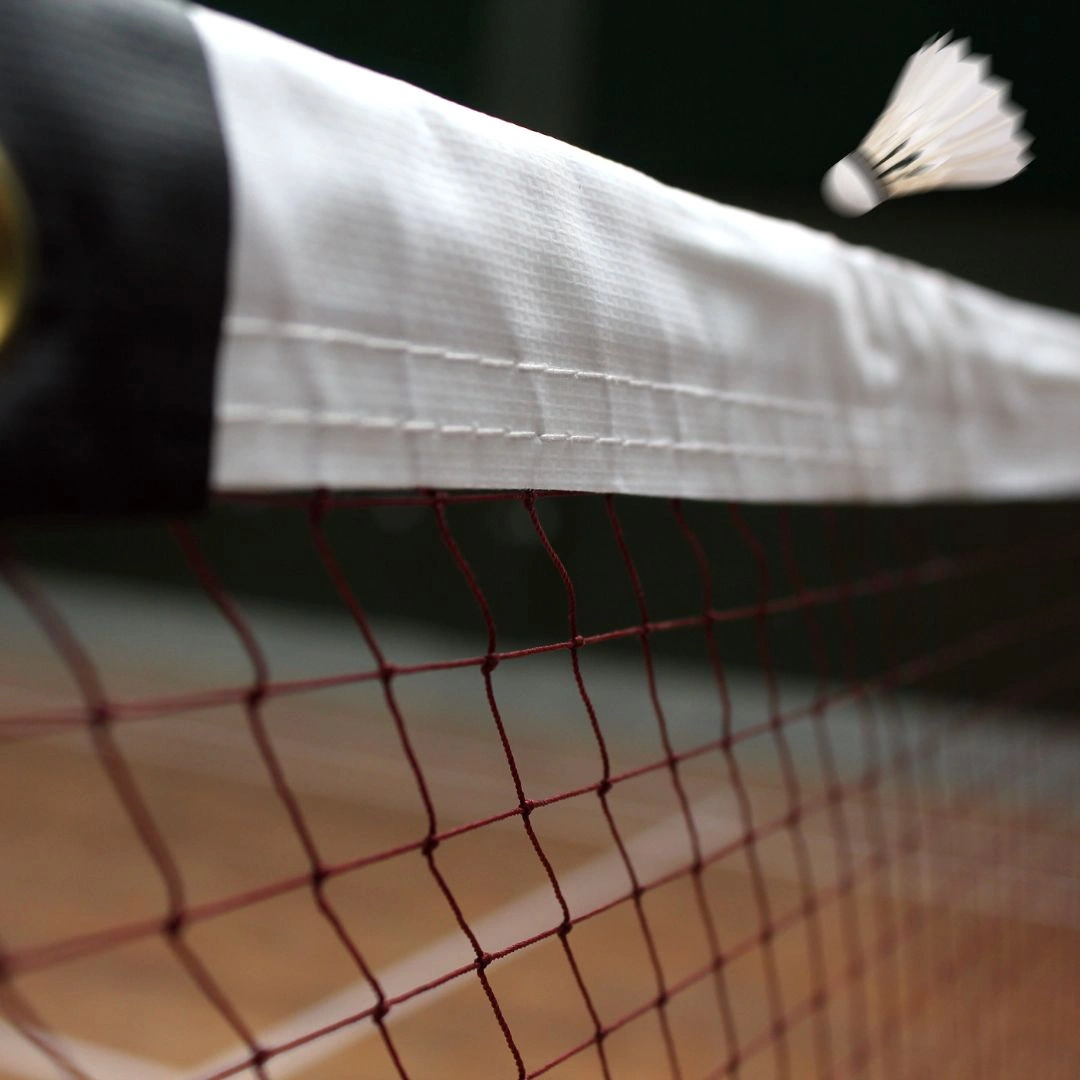
The net represents a crucial element in badminton court measurements, with specific height requirements that directly impact gameplay. The net stands 5 feet 1 inch (1.55 meters) high at the posts and 5 feet (1.524 meters) high at the center. This slight dip in the center is intentional and accounts for the natural sag that occurs when the net is properly tensioned.
The net posts are positioned exactly on the doubles side lines, outside the court boundaries. These posts must be sturdy enough to maintain proper net tension without allowing excessive movement during play. The net itself extends beyond the court width to ensure complete coverage of the playing area.
Line Markings and Their Measurements
Boundary Lines
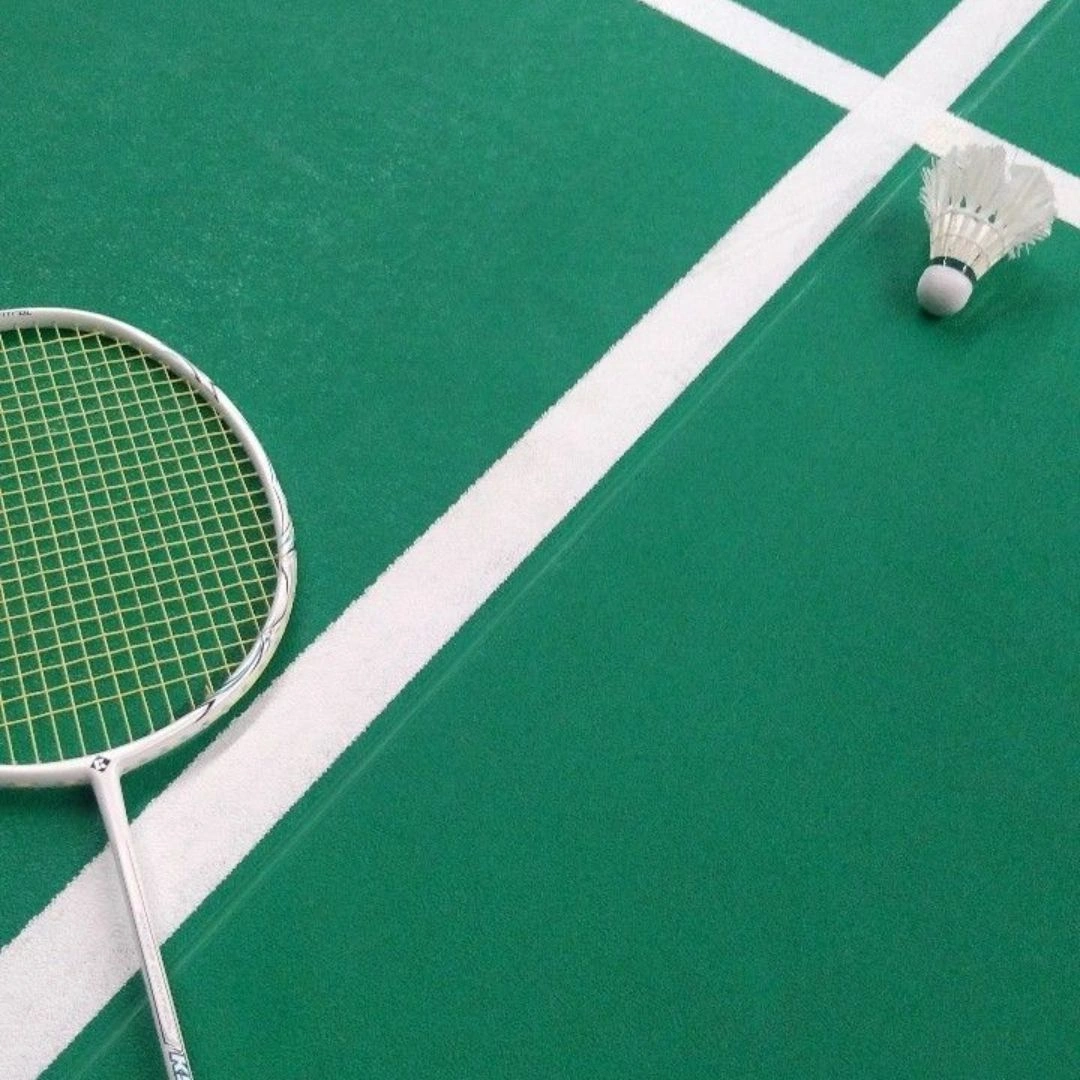
All boundary lines in badminton court measurements have a standard width of 1.5 inches (40 millimeters). This width ensures clear visibility while minimizing interference with gameplay. The lines are typically marked in white or yellow to provide maximum contrast against court surfaces.
The baseline runs the full 20-foot width of the court at each end, marking the back boundary for both singles and doubles play. The side lines extend the full 44-foot length of the court, with the inner side lines marking the singles court boundary and the outer side lines defining the doubles court edges.
Service Lines
Service line markings are critical components of badminton court dimensions. The short service line runs parallel to the net at a distance of 6 feet 6 inches (1.98 meters) from the net. This line extends across the full 20-foot width of the court and marks the front boundary of all service courts.
The doubles service line creates the back boundary for doubles service courts. This line is positioned 2 feet 6 inches (0.76 meters) in front of the baseline and runs the full width of the court. In singles play, serves can extend all the way to the baseline, making this line irrelevant for singles service.
Center Line
The center line divides the court into left and right service courts on each side of the net. This line runs from the short service line to the back boundary (baseline for singles, doubles service line for doubles) and measures exactly 22 feet (6.7 meters) in length on each side of the net.
The center line plays a crucial role in service rules and court positioning. Serves must land in the diagonally opposite service court, making this line essential for determining legal service areas. Understanding these badminton court measurements helps players develop more accurate serving techniques.
Height Requirements and Clearances
Ceiling Height
While not technically part of the court surface badminton court measurements, ceiling height requirements are essential for proper play. The BWF recommends a minimum ceiling height of 30 feet (9.14 meters) for competitive play. This clearance allows for high defensive shots and serves without interference from overhead obstacles.
For recreational facilities, a minimum ceiling height of 24 feet (7.32 meters) may be acceptable, though this can limit certain advanced shots and strategies. When planning court construction, adequate ceiling height should be prioritized to ensure unrestricted gameplay.
Safety Clearances
Proper badminton court dimensions must include safety clearances around the court perimeter. The BWF recommends minimum clearances of 6 feet (1.83 meters) on all sides of the court and 3 feet (0.91 meters) behind each baseline for safe movement and shot execution.
These clearances prevent player collisions with walls or equipment and allow for proper follow-through on shots near the boundaries. Facilities with limited space may reduce these clearances slightly, but doing so can impact safety and gameplay quality.
Court Surface and Marking Specifications
Surface Requirements
The playing surface significantly impacts how badminton court measurements translate into actual gameplay. Approved court surfaces include wood, synthetic materials, and certain concrete-based systems. The surface must provide consistent ball bounce, adequate traction, and shock absorption for player safety.
Surface color typically ranges from light green to blue, providing good contrast with the white shuttlecock and court markings. The surface should be non-reflective to prevent glare and maintain clear visibility of the shuttlecock throughout its flight path.
Line Marking Materials
Court lines must be durable, clearly visible, and precisely applied according to badminton court measurements. Most professional courts use paint or tape systems specifically designed for sport court applications. These materials must withstand regular play, cleaning, and maintenance while maintaining their visibility and dimensions.
Line color is typically white or yellow, chosen to provide maximum contrast against the court surface. The lines must be consistently applied with sharp, clean edges to ensure accurate line calls during competitive play.
Equipment Placement and Badminton Court Size Considerations
Net and Post Systems
Net and post placement requires precise adherence to badminton court measurements. The posts must be positioned exactly on the doubles side lines, 20 feet (6.1 meters) apart center-to-center. The posts extend approximately 6 feet (1.83 meters) above the court surface to accommodate the net height and tensioning systems.
Modern post systems often include tensioning mechanisms that allow for fine adjustments to net height and tautness. These systems must be designed to maintain consistent badminton court dimensions even under varying temperature and humidity conditions.
Player Seating and Spectator Areas
When designing facilities, badminton court measurements must account for player seating and spectator areas. Player chairs are typically positioned behind the baseline on each side, requiring additional clearance beyond the minimum safety requirements.
Spectator seating should be positioned to provide clear views of the entire court while maintaining adequate safety distances. Elevated seating helps spectators see over players and equipment, but must not interfere with ceiling height requirements for high shots.
Recreational vs Professional Badminton Court Dimensions
Professional Standards
Professional and tournament venues must adhere strictly to official badminton court measurements established by the BWF. These standards leave no room for variation, ensuring that players experience identical conditions regardless of the competition venue.
Professional courts undergo regular inspections and measurements to verify compliance. Any deviation from standard badminton court dimensions can result in venue disqualification from hosting sanctioned events. This strict adherence ensures fair competition and maintains the integrity of the sport.
Recreational Flexibility
Recreational facilities may have some flexibility in badminton court measurements, particularly regarding clearances and surface specifications. However, the basic court dimensions should remain as close to standard as possible to ensure players develop proper spatial awareness and shot techniques.
Home court installations often face space constraints that require compromises in clearance areas or ceiling height. While these adaptations may be necessary, understanding standard badminton court dimensions helps ensure the best possible playing experience within available space.
Common Measurement Mistakes and How to Avoid Them
Inaccurate Line Placement
One of the most common errors in badminton court measurements involves incorrect line placement, particularly for service lines and center lines. These mistakes can significantly impact gameplay and may not be immediately obvious to casual players.
To avoid these errors, always use professional-grade measuring tools and verify all measurements multiple times before marking lines. Creating a detailed measurement plan and having it reviewed by experienced court installers can prevent costly mistakes.
Net Height Variations
Improper net height is another frequent issue that affects badminton court dimensions. The net must measure exactly 5 feet (1.524 meters) at the center and 5 feet 1 inch (1.55 meters) at the posts. Regular measurement and adjustment are necessary to maintain these specifications.
Using a proper net height gauge and checking measurements regularly ensures consistent playing conditions. Net tension should be adjusted to achieve the correct height while maintaining appropriate tautness across the width of the court.
| Measurement Type | Standard Dimension | Common Mistake | Correction Method |
|---|---|---|---|
| Court Length | 44 feet (13.4m) | Measuring to wrong boundary | Use baseline as reference |
| Court Width | 20 feet (6.1m) | Confusing singles/doubles | Always measure full width |
| Net Height (Center) | 5 feet (1.524m) | Using post height | Measure at exact center |
| Service Line Distance | 6.5 feet (1.98m) from net | Measuring from wrong reference | Use net as starting point |
International Standards and Variations
BWF Regulations
The Badminton World Federation sets the global standards for badminton court measurements used in international competition. These regulations are updated periodically to reflect changes in equipment, playing styles, and safety requirements.
BWF standards serve as the foundation for national and regional badminton organizations worldwide. Understanding these standards ensures that courts meet the requirements for hosting sanctioned tournaments and provide consistent playing conditions for competitive players.

Regional Adaptations
While core badminton court dimensions remain consistent globally, some regions may have specific requirements for recreational facilities or amateur competitions. These variations typically involve safety clearances, surface specifications, or lighting requirements rather than basic court measurements.
Players traveling internationally for competition can rely on consistent badminton court measurements regardless of location. This standardization allows players to focus on their performance rather than adapting to different court dimensions.
Construction and Installation Guidelines
Professional Installation Requirements
Proper construction of courts requires detailed understanding of badminton court measurements and professional installation techniques. The process involves precise surveying, accurate line marking, and proper surface preparation to ensure long-term durability and performance.
Professional installers use specialized equipment to ensure badminton court dimensions meet exact specifications. This includes laser measuring systems, professional-grade marking equipment, and quality control procedures that verify accuracy at each step of the installation process.
DIY Installation Considerations
While professional installation is recommended, some recreational facilities may consider DIY court marking projects. Success in these projects requires careful planning, quality tools, and thorough understanding of badminton court measurements.
DIY installations should begin with professional surveying to establish accurate reference points. All measurements should be verified multiple times, and installation should proceed systematically to avoid cumulative errors that could affect court playability.
Maintenance and Long-term Care
Maintaining accurate badminton court measurements requires regular inspection and maintenance of line markings, net systems, and playing surfaces. Weather, wear, and settling can gradually affect court dimensions and playing characteristics.
Scheduled maintenance programs should include measurement verification, line remarking as needed, and net system adjustments. Proper maintenance ensures that courts continue to meet badminton court dimensions standards throughout their operational life.
Technology and Modern Court Design
Digital Measurement Systems
Modern court construction increasingly relies on digital measurement and layout systems that ensure precise badminton court measurements. These systems can achieve accuracy levels impossible with traditional measuring methods and provide digital records of court specifications.
GPS and laser-based systems allow installers to verify badminton court dimensions with millimeter precision. This technology reduces installation errors and provides documentation that can be valuable for facility management and tournament hosting applications.
Smart Court Features
Some modern facilities incorporate smart technology that can monitor and verify badminton court measurements continuously. These systems can detect changes in court dimensions due to settling, temperature variations, or wear, alerting facility managers to maintenance needs.
Advanced court systems may include automated net tensioning systems that maintain proper height and tautness regardless of environmental conditions. These features help ensure consistent badminton court dimensions and optimal playing conditions.
Economic Considerations and Cost Factors
Construction Budgeting
Understanding badminton court measurements is essential for accurate construction budgeting. Court size directly impacts material requirements, installation labor, and facility planning costs. Proper planning ensures that budgets account for all necessary components and clearances.
Cost factors include surface materials, line marking systems, net and post equipment, and facility modifications needed to accommodate proper badminton court dimensions. Professional consultation during planning can help optimize costs while maintaining quality standards.
Long-term Value
Investing in properly measured and constructed courts provides long-term value through reduced maintenance costs, enhanced player satisfaction, and eligibility for hosting competitive events. Courts built to exact badminton court measurements maintain their value and functionality over extended periods.
Facilities with accurate court dimensions often attract more serious players and competitive events, potentially increasing revenue and community engagement. The investment in proper badminton court measurements often pays dividends through increased facility utilization and reputation.
Conclusion
Understanding precise badminton court measurements forms the foundation of fair play, safety, and enjoyment in this dynamic sport. From the overall dimensions of 44 feet by 20 feet to the specific heights of nets and placement of service lines, every measurement serves a purpose in creating optimal playing conditions.
Whether you’re a recreational player looking to improve your game awareness, a facility manager planning court construction, or a coach teaching proper court positioning, accurate knowledge of badminton court dimensions and badminton court size specifications is invaluable. These measurements ensure consistency across all levels of play and maintain the integrity that makes badminton such a precise and exciting sport.
The investment in understanding and implementing correct badminton court measurements pays dividends through enhanced playing experiences, reduced disputes over line calls, and the satisfaction of playing on properly designed courts. As the sport continues to grow globally, adherence to these standards ensures that badminton maintains its reputation for fairness and competitive excellence.
For anyone involved in badminton – whether as a player, coach, facility operator, or enthusiast – mastering the details of badminton court measurements represents an essential step toward deeper engagement with this wonderful sport. When you step onto a properly measured court, you’re participating in a tradition of precision and excellence that connects players worldwide through shared standards and common respect for the game.
Frequently Asked Questions
Q: What is the size of the badminton court?
A: A standard badminton court size measures 44 feet (13.4 meters) in length and 20 feet (6.1 meters) in width for doubles play. For singles play, the width reduces to 17 feet (5.18 meters) while maintaining the same 44-foot length. These badminton court measurements are standardized worldwide by the Badminton World Federation and must be followed for all competitive play.
Q: Is a badminton court 20 feet by 44 feet?
A: Yes, a badminton court measures exactly 20 feet by 44 feet for doubles play. These are the official badminton court dimensions established by international standards. However, it’s important to note that for singles play, only the inner 17 feet of width is used, though the overall court marking remains 20 feet wide. The 44-foot length remains constant for both singles and doubles formats.
Q: What is badminton net height?
A: The Badminton World Federation (BWF) sets the standard height for the badminton net. The net should be 1.55 meters high at the edges, where it is supported by the posts, and slightly lower at the center, measuring 1.524 meters (5 feet).
👉 Also, check out our latest guide on Basketball Court Dimensions only at dimensions path!
Looking to make someone smile? Find thoughtful wishes at “TerrificWishes.com”