The Future of Care: Navigating Hospital Management in 2026
There’s a persistent myth in the medical world that the best doctors make the best hospital administrators. It sounds logical, right? If you know the medicine, you know the business. But in my years covering the intersection of tech and health, I’ve seen that these are two entirely different animals. Being a great surgeon doesn’t mean you know how to optimize a multi-million dollar supply chain or manage a 500-person digital workflow during a city-wide emergency.
Why is a hospital management course in India the new career catalyst?
A professional hospital management course in India acts as a bridge between frontline medical care and high-level operational strategy. These programs focus on legal ethics, financial auditing, and the integration of AI-driven patient scheduling. In a landscape where India is becoming a global medical tourism hub, these courses provide the credentials needed to manage world-class infrastructure.
I recently visited a facility in Gujarat where the Chief Operating Officer had transitioned from a purely administrative role into a leadership position after completing specialized training. The difference was night and day. We sat in a room filled with real-time data dashboards, and he explained that without understanding the “language of systems,” he would have been a bottleneck for the hospital’s growth.
So what? For you, this means that clinical knowledge alone is no longer the ceiling. Getting the right certification opens doors to executive roles where you can influence how care is delivered on a massive scale.
How do healthcare management courses in Ahmedabad differ from global standards?
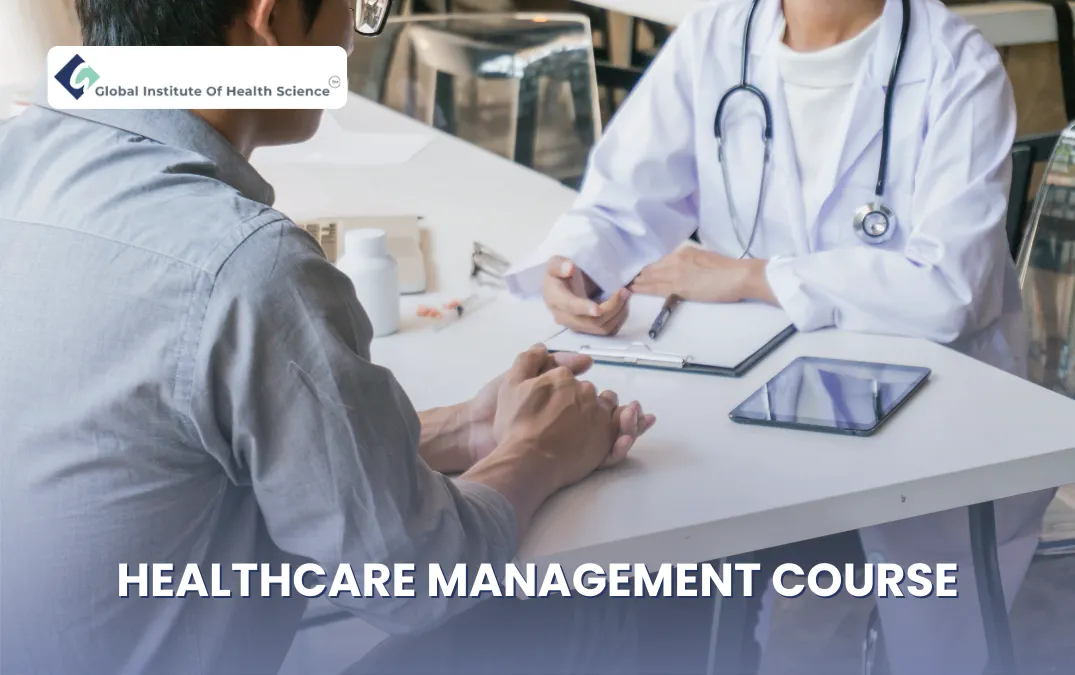
While global standards focus on broad policy, healthcare management courses in Ahmedabad are tailored to the unique demographic and industrial density of Gujarat. These courses emphasize local regulatory compliance, public-private partnership (PPP) models, and the specific logistics of “Smart City” healthcare integrations unique to the region’s urban planning.
|
Feature |
Localized (Ahmedabad) Focus |
Global/General Standard |
|
Primary Regulation |
NABH & State-specific Gujarat laws |
ISO & International JCI Standards |
|
Operational Focus |
High-volume OPD & Community health |
Tech-heavy insurance & niche clinics |
|
Tech Integration |
Ayushman Bharat Digital Mission (ABDM) |
General EMR/EHR Systems |
|
Key Networking |
Local pharma & manufacturing ties |
Global medical research institutes |
So what? If you plan to build a career in India’s western corridor, localizing your education ensures you aren’t just “book smart,” but “market ready” for the specific challenges of the region.
What does “AI-First” administration look like in May 2026?
AI-First administration means using predictive analytics to stop problems before they happen, such as predicting nursing shortages or equipment failures. Modern hospital leaders use software like Apollo-Managed AI or HealthEdge to automate billing and reduce patient wait times by up to 40%. It’s not about replacing humans; it’s about giving them more time to be human.
We’ve all been in those hospital waiting rooms that feel like an endless loop. In 2026, a trained manager looks at that room and sees a data problem. By applying the principles taught in a hospital management course in India, you learn to use “Digital Twin” technology to simulate patient flow and fix the lag.
So what? Efficiency isn’t just about saving money; it’s about reducing patient stress and saving lives. Being the person who knows how to implement these tools makes you the most valuable person in the building.
Can you transition from a non-medical background into healthcare?
Yes, and in fact, it is increasingly encouraged. Hospitals are now seeking experts in logistics, hospitality, and IT to bring fresh perspectives to patient experience. Specialized healthcare management courses in Ahmedabad offer “bridge modules” for professionals moving from industries like retail or manufacturing into the medical sector.
I’ve seen former hotel managers excel in hospital administration because they understand “hospitality” in a way that traditional medical staff might overlook. They treat the patient like a guest and the recovery room like a high-end service environment. When you combine that mindset with a formal hospital management course in India, you create a powerhouse professional who can tackle the “experience” side of medicine.
So what? Your past career isn’t a detour; it’s a competitive advantage. You just need the healthcare-specific framework to house your existing skills.
How is the Ayushman Bharat Digital Mission changing the job market?
The mission has created a massive demand for administrators who can manage digital health IDs and interoperable health records. This national shift requires a workforce that understands data privacy laws and digital infrastructure. Courses in 2026 now dedicate nearly 30% of their curriculum to this specific government initiative.
People Also Ask (FAQ)
1. Which is the best institute for healthcare management courses in Ahmedabad?
While many offer them, look for institutions like gihsonline that offer flexibility for working professionals and have direct ties to local Gujarat hospital networks for placements.
2. Is a hospital management course in India valid for jobs abroad?
Yes. Most Indian certifications, especially those aligned with international standards like NABH, are highly regarded in the Middle East and Southeast Asia.
3. What is the starting salary for a hospital manager in Gujarat?
In 2026, entry-level roles typically range from ₹6L to ₹10L per annum, with rapid increases as you move into specialized facility management or operations.
4. Can I study these courses while working full-time?
Most modern programs are hybrid or online-first, specifically designed for doctors or working professionals who can’t afford to take a career break.
5. Do these courses cover medical law and ethics?
Absolutely. In 2026, legal compliance regarding patient data and medical negligence is a core pillar of any reputable management program.
Ready to Lead the Future of Health?
The medical industry is moving faster than ever. To lead a hospital in 2026, you need more than a title; you need a toolkit of modern strategies and digital fluency. Whether you are in Gujarat looking for healthcare management courses in Ahmedabad or aiming for a broader hospital management course in India, the time to upgrade your career is now.
What do you think is the biggest challenge facing hospital managers today? Let’s discuss in the comments below!